
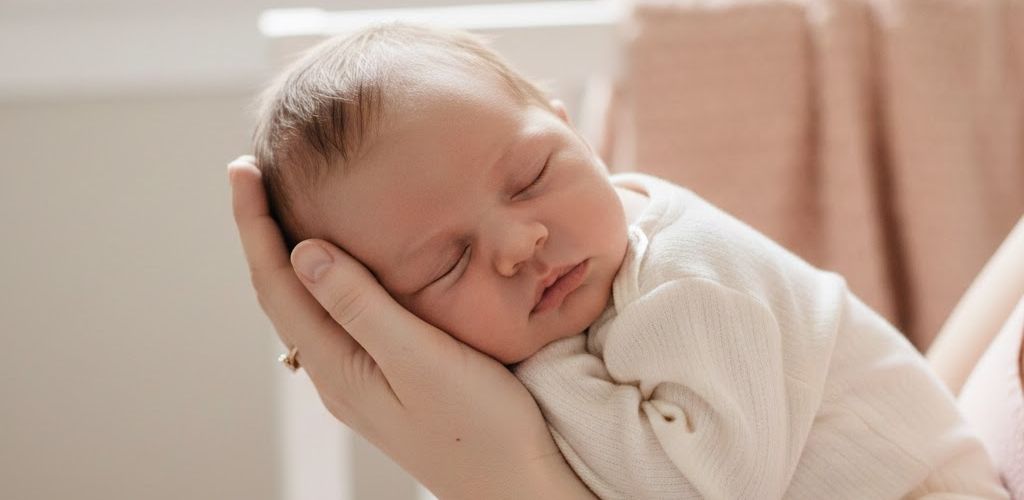
Your baby only sleeps when held? Welcome to the club! If you're reading this while your little one is snoozing peacefully in your arms (and you're desperately trying not to move a single muscle), then this article is for you. Let's talk about why your baby only wants to sleep on you and what you can actually do about it - without any cry-it-out nonsense.
I remember those early days with my daughter so vividly. The moment I would try to transfer her from my arms to the crib, her eyes would pop wide open as if I had just dropped her into a pool of ice-cold water. Every. Single. Time.
And don't even get me started on the "put them down drowsy but awake" advice. Drowsy but awake? More like drowsy but WIDE AWAKE AND SCREAMING the second their back touched that mattress.
So there I was, trapped under a sleeping baby for hours on end, afraid to breathe too loudly. I binged entire Netflix series. I became a master at eating with one hand. I held my pee for way longer than medically advisable.
Sound familiar?
If you're wondering whether your baby will ever sleep anywhere other than your arms, I have good news for you: they will. Eventually. But until then, let's dive into why this happens and what you can do about it without losing your mind (or your baby's trust).
Table of Contents
- Why Does My Baby Only Sleep When Held?
- Is It Bad That My Baby Only Sleeps In My Arms?
- The Biology Behind Contact Sleeping
- When Do Babies Grow Out Of This?
- Gentle Ways To Help Your Baby Sleep Independently
- What NOT To Do
- When Contact Sleeping Is Actually The Answer
- Conclusion
- FAQs
1. Why Does My Baby Only Sleep When Held?
First things first: your baby is not broken. They're not "spoiled." And you definitely haven't created a "bad habit." Your baby is simply being... a baby.
Here's the thing. For nine whole months, your little one was snuggled up inside you. They were warm, cozy, and constantly rocked by your movements. They heard your heartbeat 24/7. They never knew what it was like to be alone.
And then suddenly - boom! - they're out in this big, cold, quiet world where they're expected to sleep alone in a flat, still crib. From their perspective, that's kind of terrifying.
So when your baby only wants to sleep in your arms, they're not being difficult. They're seeking what feels safe and familiar.
Here are the main reasons why babies prefer to sleep when held:
The Fourth Trimester Effect
The first three months after birth are often called the "fourth trimester" because babies are still adjusting to life outside the womb. During this time, they crave the sensations they experienced before birth - warmth, movement, closeness, and the sound of your heartbeat.
Immature Nervous System
Newborns have an immature nervous system that makes them startle easily. You know that adorable (but also super annoying) reflex where their arms fly out and they wake themselves up? That's the Moro reflex, and it can jolt them awake the second you try to put them down.
Separation Anxiety
As babies get older, around 8 months, separation anxiety kicks in. They become very aware that you are a separate person from them - and they do NOT like that one bit.
They Can Smell You
Babies have an incredible sense of smell. They can literally smell when you're near and when you're not. So when you put them down, they notice your scent is gone.
Sleep Cycles
Babies have much shorter sleep cycles than adults (around 45-50 minutes). They spend more time in light sleep, which means they wake more easily. When they're in your arms, they might rouse slightly and then settle right back down because they feel secure. In the crib? Not so much.
2. Is It Bad That My Baby Only Sleeps In My Arms?
Short answer: No.
Longer answer: It depends on who you ask - but I say no.
There's this pervasive idea in our culture that babies need to learn to sleep independently as soon as possible, or else... what? They'll be sleeping in your bed when they're 18? Spoiler alert: they won't.
The truth is that contact sleeping is biologically normal. Throughout human history, babies have slept close to their caregivers. The expectation that infants should sleep alone in a separate room is actually quite new in the grand scheme of things.
Research shows that babies who are held frequently and whose needs are met consistently actually develop MORE independence over time, not less. They feel secure, so they're eventually able to venture out on their own.
That said, I get it. Contact sleeping can be exhausting. You can't do anything else. Your arms fall asleep. You develop a permanent neck crick. You haven't showered in days because you literally cannot put this baby down.
So while there's nothing wrong with contact sleeping from your baby's perspective, your needs matter too. And it's okay to gently work toward helping your baby sleep in other places - when you're both ready.
3. The Biology Behind Contact Sleeping
Let me put on my nerdy hat for a second, because understanding the science behind this can actually help you feel better about the whole situation.
Cortisol and Stress Regulation
Babies cannot regulate their own stress hormones. When they're separated from you, their cortisol levels rise. Being held helps keep those stress hormones in check, which leads to better, deeper sleep.
Oxytocin: The Cuddle Hormone
When you hold your baby, both of you release oxytocin - the bonding hormone. This makes both of you feel calm and relaxed. It's basically nature's way of encouraging closeness.
Body Temperature Regulation
Young babies struggle to regulate their own body temperature. Your body heat helps keep them at the perfect temperature for sleep.
Heart Rate and Breathing
Studies have shown that babies who sleep in contact with their caregivers have more stable heart rates and breathing patterns. Your body literally helps regulate their vital functions.
So basically, your baby wants to sleep on you because their body knows it's the safest, most regulated place to be. Pretty smart, actually.
4. When Do Babies Grow Out Of This?
I know, I know. You want a timeline. You want to know WHEN this will end.
Here's the honest truth: it varies. A lot.
Some babies start accepting the crib around 3-4 months when they develop more regular sleep patterns and their nervous system matures a bit.
Other babies (like my son, bless his clingy little heart) might prefer contact sleeping well into toddlerhood.
Generally speaking, you can expect some improvement around these ages:
- 3-4 months: Circadian rhythm develops, sleep becomes more predictable
- 5-6 months: Moro reflex fades, less startling awake
- 8-12 months: Object permanence develops (they start understanding you still exist even when they can't see you)
- 12-18 months: Many toddlers become more accepting of sleeping in their own space
But please don't take these as hard rules. Your baby might hit these milestones earlier or later - and both are completely normal.
The important thing to remember is that this phase WILL end. No child sleeps in their parent's arms forever (even if it feels like yours might be the exception).
5. Gentle Ways To Help Your Baby Sleep Independently
Alright, let's get practical. If you're ready to gently encourage your baby to sleep in other places, here are some strategies that don't involve leaving your baby to cry alone.
The Warm Crib Trick
Before transferring your baby, warm up the crib with a heating pad or warm water bottle (remove it before putting baby down, obviously). The sudden cold of the mattress is often what wakes them.
Master The Transfer
The transfer is an art form. Here's what worked for me:
- Wait until baby is in deep sleep (limp limbs, slow breathing, no eye movement)
- Lower them VERY slowly, bum first
- Keep your hands on them for a few minutes
- Slowly slide your hands out
- Don't make eye contact (seriously, it's like they have a sixth sense)
The Butt Pat
Once baby is down, gently pat their bum or side rhythmically. This mimics the motion they felt in the womb and can help them stay settled.
Swaddling
For young babies (before they start rolling), a good swaddle can work wonders. It prevents the startle reflex and creates that snug, held feeling.
White Noise
White noise mimics the whooshing sounds baby heard in the womb. It's like auditory comfort food for them. Keep it running throughout the entire nap or night.
Your Scent
Try sleeping with the crib sheet for a night before using it, so it smells like you. Some parents also leave a worn (safe, small) piece of clothing in the crib.
Practice During The Easiest Nap
Start with the first nap of the day when sleep pressure is highest. Baby is more likely to accept the crib when they're really tired.
The Side-Lying Position
If you're breastfeeding, try nursing in the side-lying position in your bed and then slowly inching away once baby is asleep. (Follow safe sleep guidelines if you do this.)
Gradual Transition
You don't have to go from "always held" to "crib" overnight. Try intermediate steps:
- Held → Baby carrier while you move around
- Carrier → Stroller
- Stroller → Swing or bouncer (supervised)
- Swing → Crib
Contact Napping Isn't All or Nothing
If your baby will do ONE nap in the crib, that's a win. They don't have to sleep independently for every single sleep. One crib nap a day plus contact naps for the rest is totally fine.
6. What NOT To Do
I wouldn't be The Baby Way if I didn't tell you what to avoid.
Don't Leave Your Baby To Cry Alone
I know, some "experts" say this is the only way babies learn to sleep independently. But research shows that babies don't actually learn to "self-soothe" when left to cry - they just learn that no one is coming.
If a sleep consultant tells you to put your baby down and not respond to their cries, run. Run fast.
Don't Rush It
There's no deadline. Your baby doesn't need to sleep independently by any specific age. Trying to force it before they're ready usually backfires anyway.
Don't Compare
Your friend's baby slept through the night in their crib at 8 weeks? Good for them. That tells you nothing about YOUR baby. Every baby is different.
Don't Blame Yourself
You didn't "create" this by holding your baby too much. You responded to your baby's needs. That's called being a good parent.
7. When Contact Sleeping Is Actually The Answer
Here's something that might surprise you: sometimes the best solution to "my baby only sleeps when held" is to... just keep holding them.
Revolutionary, I know.
But hear me out. Contact sleeping:
- Promotes bonding
- Supports breastfeeding
- Helps regulate baby's physiological functions
- Gives you time to rest (even if not sleep)
- Will not last forever
If contact sleeping is working for your family - if you're getting enough rest, if you're not miserable, if everyone is functioning - then there's no reason to change anything just because society tells you your baby "should" be sleeping alone.
Babywearing can make contact naps more practical. Pop your baby in a carrier and suddenly you have two hands! You can do things! Sort of!
There's also something to be said for just leaning into this phase. It won't last forever. One day you'll put your baby down and they'll just... stay asleep. And eventually, they'll be a teenager who won't want to be in the same room as you.
So maybe, just maybe, it's okay to enjoy the cuddles while they last.
8. Conclusion
If your baby only sleeps when held, you're not alone. According to surveys, about 72% of parents report the same thing in the first few months. It's one of the most Googled baby sleep questions for a reason.
Your baby isn't manipulating you. They're not spoiled. They're simply seeking the safety and comfort that your arms provide.
Will they sleep independently eventually? Yes. Absolutely.
Do you have to sleep train or use cry-it-out methods to get there? Absolutely not.
Try the gentle strategies I mentioned if you're ready. Or don't, if contact sleeping is working for you. There's no right answer here - just what works for your family.
And in the meantime, download some good shows, perfect your one-handed snacking technique, and try to enjoy the snuggles. These days are long, but they're also fleeting.
9. FAQs
1. Will holding my baby to sleep create a bad habit?
No. Meeting your baby's needs for closeness does not create "bad habits." It creates secure attachment, which actually leads to MORE independence later. Your baby will not need to be held to sleep forever.
2. My baby is 6 months old and still won't sleep unless held. Is this normal?
Yes! Many babies prefer contact sleeping well into their first year and beyond. Six months is still very young. Their need for closeness is completely developmentally appropriate.
3. Should I sleep train my baby to break this habit?
Only if you want to. Sleep training is not necessary for babies to eventually sleep independently. If cry-it-out methods don't feel right to you, trust that instinct. There are gentler ways to encourage independent sleep - or you can wait it out entirely.
4. Is it safe to let my baby sleep on me?
Contact sleeping is safe as long as you're awake and alert. The risk comes if you fall asleep while holding baby, especially on a sofa or recliner. If you're exhausted, it's safer to set up a safe sleep space (firm mattress, no pillows/blankets, away from edges) and lie down with baby there, rather than risk falling asleep on the couch.
5. Why does my baby wake up the second I put them down?
Babies can sense the change in temperature, position, and your presence. They also startle easily due to the Moro reflex. Try warming the sleep surface, transferring during deep sleep, and keeping your hand on them for a few minutes after putting them down.
6. My partner can put the baby down but I can't. Why?
This is SO common, especially with breastfeeding moms. Baby can smell your milk and knows comfort is literally right there. Sometimes having a non-breastfeeding partner do the transfer helps. It's not personal - your baby just really, really loves you (and your boobs).